Aluminum Casting Techniques: a Deep Dive Into Materials and Techniques for Success
Aluminum casting strategies play an important function in production. Different approaches exist, each suited to different applications and requirements. Sand casting is favored for larger components, while die casting is known for its precision in high-volume production. Investment casting provides detailed styles with premium finishes. Understanding these distinctions can significantly impact project results. aluminum casting. Nonetheless, picking the proper approach is not always simple, resulting in crucial considerations that should be checked out even more
Comprehending Aluminum Casting: A Summary
Aluminum casting is a crucial manufacturing process utilized across various industries to create elaborate parts with high precision. This approach entails putting molten aluminum into a mold, allowing it to strengthen and take the form of the preferred part. The flexibility of aluminum, integrated with its corrosion-resistant and lightweight homes, makes it an optimal choice for applications in auto, aerospace, and customer products.
Different casting techniques exist, each suited to particular demands and job ranges. Aspects such as mold materials, cooling down prices, and the intricacy of the layout play a considerable role in determining one of the most effective strategy. Furthermore, the homes of the aluminum alloy utilized can affect the end product's sturdiness, toughness, and surface area surface.
Understanding the principles of aluminum casting allows suppliers to enhance manufacturing processes, minimize waste, and warranty top notch outcome, which is essential in today's affordable market.
Sand Casting: Techniques and Applications
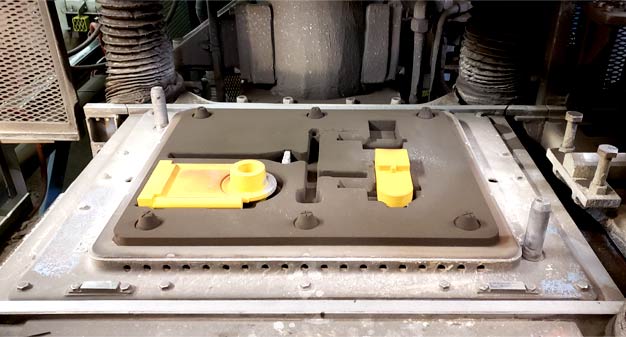
Amongst the various strategies utilized in aluminum casting, sand casting sticks out due to its flexibility and cost-effectiveness. This method includes producing a mold and mildew from a mix of sand and binder, which can be shaped to suit intricate designs. As soon as the mold and mildew is ready, liquified aluminum is put right into it, enabling intricate attributes and details to be caught.
Sand casting is especially beneficial for creating huge parts and low-volume production runs, making it ideal for vehicle parts, equipment components, and artistic sculptures. The technique also suits a variety of aluminum alloys, boosting its flexibility in various applications. In addition, the usage of sand as a mold and mildew product permits for very easy reclamation and reuse, contributing to ecologically sustainable practices. Accomplishing high dimensional accuracy can present challenges, necessitating competent workmanship and cautious control of the casting process. On the whole, sand casting stays a fundamental approach in aluminum factories worldwide.
Die Casting: Precision and Efficiency
Die casting is an extremely reliable technique of creating aluminum components with extraordinary dimensional accuracy and surface finish. This process includes forcing liquified aluminum into a precisely machined mold under high pressure, which permits for detailed styles and very little material waste. The rapid cooling of the alloy within the mold and mildew leads to a solidified part that often needs little to no additional machining.
Die casting is specifically useful for high-volume manufacturing runs, where consistency and rate are critical. It supports the creation of complicated geometries, making it suitable for numerous applications, including automotive, aerospace, and durable goods.
Additionally, the procedure can suit various aluminum alloys, boosting the mechanical buildings of the finished items. With website its capability to produce lightweight yet sturdy parts, die casting sticks out as a recommended technique in modern-day production, supplying both precision and efficiency in aluminum casting.
Investment Casting: Information and Complexity
Investment casting, also called lost-wax casting, is a versatile and accurate method for producing complex aluminum elements. This method is especially valued for its capability to produce complex geometries and fine details that are usually unattainable with other casting approaches. The procedure starts with a wax pattern, which is coated in a ceramic shell. Once the shell sets, the wax is disappeared, leaving a comprehensive mold for aluminum pouring.
The benefits of financial investment casting consist of remarkable surface finish and dimensional accuracy, decreasing the demand for considerable machining later. It is particularly useful for little to medium production runs where precision is crucial. This method suits numerous aluminum alloys, boosting its applicability across industries. Aluminum Casting Company. Eventually, investment casting attracts attention for its ability to supply both visual appeal and functional efficiency in aluminum components, making it a preferred choice for designers and engineers seeking facility services
Picking the Right Approach for Your Project
Just how can one determine the most suitable aluminum casting method for a specific task? The selection procedure rests on several essential factors, including the intricacy of the design, the preferred surface area coating, and production quantity requirements. For complex designs, investment casting frequently confirms beneficial as a result of its ability to catch great details. On the other hand, sand casting might be preferred for bigger, much less complex components, supplying cost-efficiency and flexibility in production.
In addition, considerations pertaining to resistances and mechanical buildings of the last item are important. For high-performance components, die casting may be the most effective option, as it offers remarkable dimensional precision and surface high quality. Furthermore, recognizing the product homes and compatibility with the selected method is essential for making sure the success of the job. Eventually, a complete evaluation of these variables will certainly lead the decision-making procedure, bring about one of the most reliable aluminum casting approach for the certain project at hand.
Frequently Asked Questions
What Is the Environmental Impact of Aluminum Casting Methods?
Just How Can I Enhance the Surface Area End Up of Cast Aluminum?
To enhance the surface area finish of actors aluminum, one can use techniques such as sandblasting, brightening, and applying finishings. Proper mold layout and temperature control additionally considerably enhance the final surface area quality of the cast item.
What Safety Safety Measures Should Be Taken Throughout Aluminum Casting?
During aluminum casting, crucial safety precautions consist of wearing protective equipment, ensuring proper air flow, making use of fire-resistant materials, keeping a safe distance from molten steel, and sticking to devices safety and security methods to avoid accidents and injuries.
How Do I Repair Usual Casting Defects?
To repair common casting flaws, one need to check the mold and mildew for damages, analyze the alloy composition, check pouring temperature level, readjust cooling rates, and assurance correct airing vent to decrease air entrapment and boost casting top quality.
What Are the Prices Related To Various Aluminum Casting Techniques?
The prices related to different aluminum casting methods vary considerably, affected by variables such as product costs, labor, equipment, and production scale. Budget factors to consider are important for selecting the most ideal casting approach for specific jobs.
Sand casting is favored for bigger elements, while die casting is known for its precision in high-volume manufacturing. Amongst the various strategies made use of in aluminum casting, sand casting stands out due to its flexibility and cost-effectiveness. Die casting is an extremely reliable technique of producing aluminum parts with remarkable dimensional precision and surface area coating. Financial investment casting, also understood as lost-wax casting, is a functional and exact method for producing intricate aluminum components. Just how can one figure out the most suitable aluminum casting approach for a particular job?